A visual guide by PandaPearl Real examples. Both sides. An honest closer look.
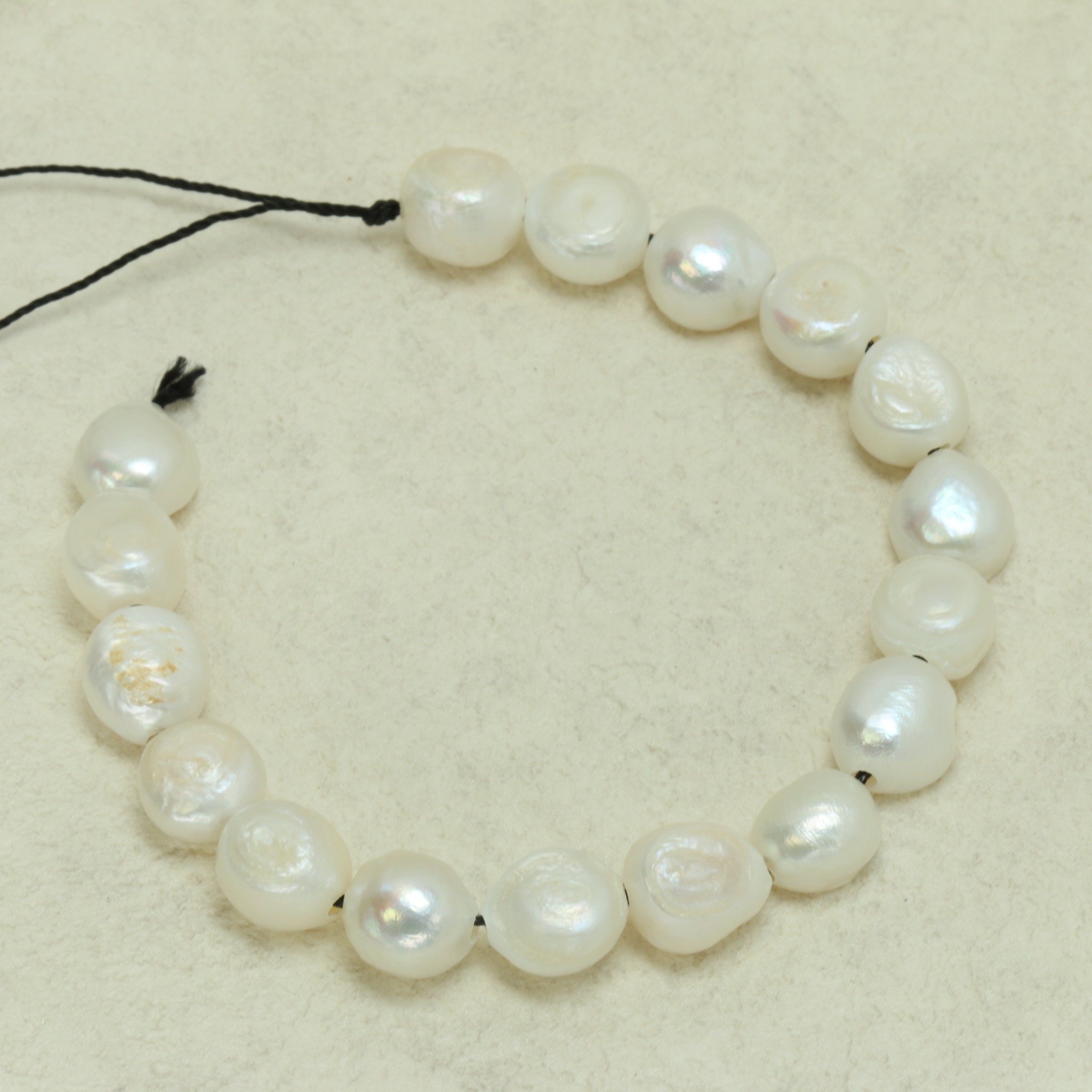
REAL PEARLS, UP CLOSEB-grade strand · sample photo
Freshwater cultured pearlsIrregular, two-sided shapesPandaPearl S / A / B system
01 / THE SIDE-BY-SIDE GUIDE
Three grades. One beautiful material.
The clearest differences are in fullness, balance between the two sides, and surface condition. Color alone never tells you the grade.
Look at the actual examples
S
PANDAPEARL GRADE
Full & balanced
Side1ACTUAL SAMPLE
A fuller shape, with attractive fullness on both sides.
More balanced Side1 and Side2
Good luster; natural texture may remain
Selected without chips or obvious spots
LOOK CLOSELY
Look for a plump, rounded body within the irregular outline.
A
PANDAPEARL GRADE
Distinctly two-sided
Side1ACTUAL SAMPLE
One side is fuller; the other may be noticeably flatter.
Less even fullness between the sides
Growth texture may be more visible
Selected without chips or obvious spots
LOOK CLOSELY
The first side can look full. Turn it over to understand the whole pearl.
B
PANDAPEARL GRADE
Visible character
Surface spotsACTUAL SAMPLE
More visible surface marks, with an individual look.
Spots, deeper pits or chips may occur
Surface condition varies pearl to pearl
Can still show beautiful luster
LOOK CLOSELY
Notice the visible spots. A bright reflection does not mean a clean surface.
Enlarged examples, not to scale. S and A show Side1 / Side2; B shows separate surface examples. Sample colors do not define a grade. Shape, color and texture vary.
THE IMPORTANT PART
S, A and B are all freshwater cultured pearls. The grade describes their visible characteristics.
02 / LEARN TO LOOK
A little attention. A lot more clarity.
“Two-sided” describes this pearl shape. It does not mean that both faces will look identical—or that the pearl must be perfectly smooth.
Always look beyond the prettiest side.
01
Look at the whole shape
Fullness is the body and volume of the pearl, not perfect roundness. S examples are fuller overall; A examples often have a flatter reverse.
02
Turn it over
Compare Side1 and Side2. A single flattering angle can hide the difference. Ask to see both sides of the actual pearls you are considering.
03
Separate texture from damage
Natural growth texture can appear in every grade. Visible spots, deep pits and chips are different features to inspect closely in B-grade examples.
04
Look at the light
Luster is the reflected glow. Check it alongside shape and surface—a B-grade pearl may still have good luster. Compare photos under similar lighting.
03 / THE DETAILS, SIMPLIFIED
The differences at a glance.
No invented scores. Just the characteristics you can look for.
PandaPearl qualitative grade comparison
What you see
S Full & balanced
A Distinctly two-sided
B Visible character
Overall fullness
Fuller, more substantial form
Less even; one side may be flatter
Varies from pearl to pearl
Both sides
More balanced appearance
A clearer difference between faces
Inspect each side individually
Surface condition
No chips or obvious spots selected
No chips or obvious spots selected
Spots, pits or chips may occur
Natural texture
May be present
May be more visible
May be more pronounced
Luster
Good luster
Assess the individual pearl
Can still be good
Overall fullness
S grade
Fuller, more substantial form
A grade
Less even; one side may be flatter
B grade
Varies from pearl to pearl
Both sides
S grade
More balanced appearance
A grade
A clearer difference between faces
B grade
Inspect each side individually
Surface condition
S grade
No chips or obvious spots selected
A grade
No chips or obvious spots selected
B grade
Spots, pits or chips may occur
Natural texture
S grade
May be present
A grade
May be more visible
B grade
May be more pronounced
Luster
S grade
Good luster
A grade
Assess the individual pearl
B grade
Can still be good
04 / FIND YOUR PREFERENCE
What catches your eye?
Start with the look you enjoy, then inspect the individual pearls.
S
Start by exploring S.
Look for a fuller body and a balanced appearance on both sides. Natural texture can still be part of the pearl.
A clearer understanding. A more considered choice.
Know what the letters tell you—and what they don’t.
Does B grade mean it is a fake pearl?
No. In this guide, B refers to freshwater cultured pearls with more visible surface features. It is not a label for imitation pearls. A grade label alone is not an authenticity report.
Are S-grade pearls perfectly round and flawless?
No. This guide covers irregular two-sided shapes. S describes fuller, more balanced examples selected without chips or obvious spots. Natural texture and individual variations can remain.
Is S / A / B a universal pearl grading system?
No. These definitions belong to PandaPearl and apply to the irregular two-sided freshwater pearls shown here. They are not a national grade, a GIA grade, or a direct equivalent to another seller’s AAA labels.
Does the grade tell me the color, size or treatment?
No. Check size, color, treatment disclosures, hole size and strand length separately in the individual product information. None can be determined from the S / A / B letter alone.
What should I check before choosing a strand?
Ask for clear views of both sides and the whole strand, preferably in similar lighting. Check the actual dimensions and any disclosed surface marks. These sample photos explain the grades; they do not guarantee an identical appearance.
KEEP DISCOVERING
A little more pearl wisdom.
Leave your email for freshwater pearl guides and updates from PandaPearl.
PP
A shared language for seeing pearls.
This is PandaPearl’s visual grading guide for irregular, two-sided freshwater cultured pearls. The criteria here focus on fullness, the two faces, surface condition and luster. They do not replace a laboratory identification report.
For broader pearl education: GIA’s pearl quality factors. This reference is educational; no affiliation or endorsement is implied.